Do You Need a Thermal Imaging Inspection?

About
Last Updated: October 31, 2026
Quick Summary
You need a thermal imaging inspection when you can name a specific reason, such as an older home with water stains, a recent renovation, rising energy bills, or a breaker that trips repeatedly. The scan is not a default upgrade for every home; if you cannot name a reason, a standard visual inspection is the better first spend.
- A thermal camera reads surface temperature and cannot see through walls.
- The scan works best when inside and outside temperatures differ enough to show heat flow.
- A temperature anomaly is a clue, not a verdict, and needs follow-up testing.
- Turn off major appliances right before the scan to avoid false hot spots.
- A low quote that excludes the attic is not the same service as a full scan.
Table of Contents
- How a Thermal Imaging Inspection Finds What Your Eyes Cannot
- What Does a Thermal Imaging Inspection Detect?
- Thermal Imaging Inspection Cost and What the Price Covers
- Limitations of Thermal Imaging Cameras You Should Know
- When an Infrared Scan Is Worth Adding to a Home Inspection
- How to Prepare for a Thermal Imaging Inspection
- Reading the Results: Confirming Suspected Defects
- Book Your Thermal Imaging Inspection with Integrity Property Inspections
- Frequently Asked Questions
How a Thermal Imaging Inspection Finds What Your Eyes Cannot
A thermal imaging inspection is a non-invasive scan that uses an infrared camera to read surface temperatures and reveal problems hidden behind walls, under floors, and above ceilings. A visual walkthrough only shows what is in plain sight.
The camera does not see through walls. It reads heat. Every object gives off thermal radiation, and wet insulation, a slow leak, or a loose electrical connection all change how heat moves across a surface. Those temperature differences show up as patterns on the camera screen.
That is the whole idea: find the temperature anomaly, then investigate the cause.
A standard visual inspection still does the heavy lifting. The infrared scan is a second set of eyes for the parts nobody can open up without causing damage.
Want to see what the scan actually involves? Here is our thermal imaging service and what it includes.
What Does a Thermal Imaging Inspection Detect?
A thermal imaging inspection detects moisture intrusion, insulation gaps, air leakage, electrical hot spots, and hidden water leaks. It works by spotting temperature differences on surfaces that look fine to the naked eye.
Here is what the scan commonly turns up:
- Moisture intrusion and slow leaks behind walls, around windows, and under sinks
- Water stains that have dried but left a damp patch behind the drywall
- Insulation gaps in walls, ceilings, and attic spaces
- Air leakage around doors, windows, and ductwork
- Electrical hot spots at outlets, breakers, and the electrical panel
- Storm damage that let water in without visible signs
- Cold spots and heat loss that point to high energy bills
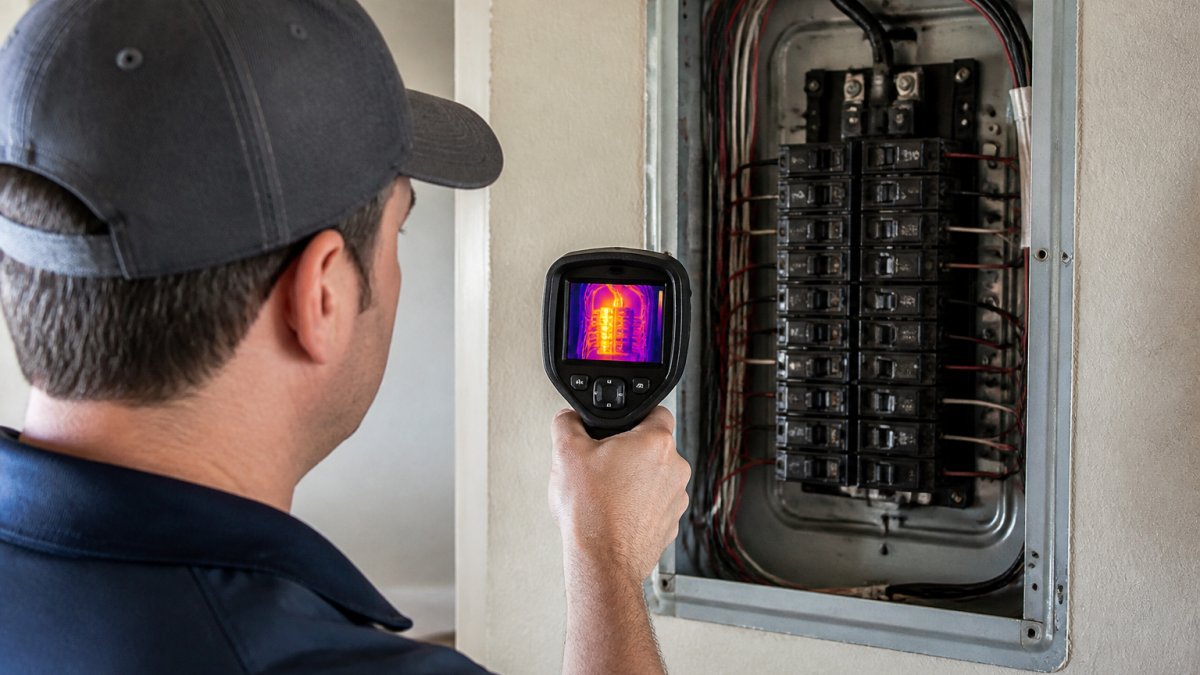
While thermal imaging excels at identifying electrical and moisture anomalies within walls, hidden blockages deep within your plumbing system often require a sewer camera inspection to reveal the true state of your underground lines.
One caution: a temperature anomaly is a clue, not a verdict. A dark patch on the wall could be a leak. It could also be a stud, a duct, or a shadow. Confirming the cause is the next step, and we cover that below.
If a scan points to moisture, our mold information page explains what that finding can mean and how to handle it.
Thermal Imaging Inspection Cost and What the Price Covers
Thermal imaging inspection cost is the question most people ask first, and the honest answer is that it depends on scope. Pricing depends on the scope of the scan, the property, and the timing. Ask Integrity Property Inspections for a current quote or see its pricing page for current rates. Treat any quote as a range, not a fixed number, because the variables below move it.
What drives the price:
- Square footage and stories. A larger or multi-story home takes longer to scan, especially attic and crawlspace areas.
- Scope of the scan. Walls, ceilings, and the electrical panel are standard. Detached structures, multiple HVAC zones, or a full exterior envelope scan add time.
- Access. A finished basement with a sealed ceiling or an attic packed with stored boxes slows the inspector and can limit what the camera can read.
- Add-ons. Some services, such as follow-up visits or written summaries, may be priced separately.
- Travel and timing. Rural properties and same-day or weekend scheduling sometimes carry a premium.
What a typical scan includes:
- A walkthrough of interior walls, ceilings, and floors
- The electrical panel and major circuits
- Areas around windows, doors, and plumbing fixtures
- The attic and, where accessible, the crawlspace
- A written summary of temperature anomalies with photos of each area of concern
What it does not include: opening walls to confirm a defect, repairing anything, or a specialist’s diagnosis.
Ask for the quote in writing with the scope spelled out: which rooms, whether the attic and crawlspace are included, and whether the report includes photos and a written summary. A low quote that excludes the attic is not the same service as a full scan.
For current rates and what each package includes, see the Integrity Property Inspections pricing page or request a quote. For quick answers about pricing, coverage, and what’s included, see the FAQ page.
Limitations of Thermal Imaging Cameras You Should Know
A thermal camera is a tool, not a crystal ball. It has real limits, and knowing them keeps you from over-trusting a scan.
The biggest one: weather conditions matter. A scan works best when inside and outside temperatures differ enough to show heat flow. On a mild day with little temperature spread, a leak or an insulation gap may barely register.
Other limits:
- It cannot see through walls. It reads surface temperature only.
- It can be fooled. Sunlight, appliances, and even a hot water pipe can create a false hot spot.
- It needs a trained eye. Reading thermal patterns takes experience. A novice can misread a stud as a leak.
- It cannot confirm the cause alone. Every finding needs follow-up testing.
The scan narrows the search. It does not replace a full building inspection or a specialist’s diagnosis.
When an Infrared Scan Is Worth Adding to a Home Inspection
An infrared scan is worth adding when the property, the symptoms, or the transaction stage give the camera something specific to look for. The scan is not a default upgrade for every home; it pays off when there is a reason to suspect hidden moisture, missing insulation, or an electrical problem. Use the guide below to decide by situation rather than by habit.
By transaction stage:
- Buying: Worth it when the home is older, has a history of leaks or water stains, has been renovated, or sits in a climate with strong seasonal temperature swings. A standard visual inspection plus a scan gives you a second pass at the parts nobody can open up.
- Selling: Worth it as a pre-listing check when you suspect a problem a buyer’s inspector will find. Finding it first lets you repair or disclose on your timeline instead of mid-negotiation.
- Owning: Worth it when energy bills climb without explanation, a room stays cold or drafty, a ceiling stain reappears, or a breaker trips repeatedly.
By property and symptom:
| Situation | Worth adding? | Why |
|---|---|---|
| Older home with water stains | Yes | Confirms whether a stain is still active |
| Recently renovated home | Yes | Verifies the work behind new drywall |
| New construction before close | Yes | Checks insulation and ductwork while the builder is still responsible |
| Home with rising energy bills | Yes | Points to insulation gaps and air leakage |
| Breaker that trips repeatedly | Yes | Flags electrical hot spots for an electrician to confirm |
| Investor buying multiple properties | Yes | Fast, non-invasive risk check per property |
| Newer home, no symptoms, mild climate | Optional | A standard inspection may be enough |
| Tight budget, no red flags | Optional | Spend on the visual inspection first |
By climate and season: the scan needs a temperature difference between inside and outside to show heat flow. In a climate with cold winters or hot summers, schedule the scan in the season that gives the biggest spread. In a mild climate with little contrast, the scan is less informative and may be better deferred to a day with a stronger gradient.
The scan is worth the add-on when you can name a reason: an age, a symptom, a renovation, or a transaction deadline. If you cannot, a standard visual inspection is the better first spend.
For a deeper look at catching problems before you buy, read how to find hidden home defects before you buy.
How to Prepare for a Thermal Imaging Inspection
Preparation is simple, and it makes the scan more accurate. The goal is to let the camera read heat flow without interference.
- Set the temperature difference. Turn the heat up in cold weather or the AC up in warm weather a few hours before the scan.
- Clear the access points. Make sure the inspector can reach the electrical panel, attic hatch, and crawlspace.
- Move furniture away from exterior walls. Blocked walls hide temperature patterns.
- Turn off major appliances right before the scan so they do not create false hot spots.
- Note any known issues. Tell the inspector about past leaks, water stains, or drafty rooms.
- Have questions ready. Ask about anything you have noticed but cannot explain.
A common mistake is scheduling a scan on a mild day with no temperature spread. The camera needs contrast to work. If the weather will not cooperate, ask whether the scan should wait.
Reading the Results: Confirming Suspected Defects
A thermal scan produces a report full of temperature anomalies. The report is a starting point, not a final answer.
Here is how we read the results:
- Moisture pattern: A cool, irregular patch on a wall or ceiling often means water.
- Insulation gap: A warm band along a wall or ceiling usually points to missing or settled insulation.
- Electrical hot spot: A bright spot at a breaker or outlet means resistance.
- Air leakage: A cold streak around a window or door frame signals a draft.
Book Your Thermal Imaging Inspection with Integrity Property Inspections
A thermal scan answers a simple question: is there something hiding in this property that a visual inspection would miss? For most buyers, the answer is worth knowing before they sign.
Integrity Property Inspections is a team of licensed TREC inspectors serving buyers, sellers, and investors. We treat every property as if we were buying it ourselves.
Do not guess about hidden moisture, insulation issues, or electrical hot spots. Book your thermal imaging inspection and get a clear read on the property before you commit.
Frequently Asked Questions
Do house inspectors check smoke detectors?
A standard home inspection typically includes testing smoke detectors and carbon monoxide alarms to confirm they are present and working. Some inspectors also note missing detectors or expired units. It is separate from thermal imaging, which looks for temperature differences rather than testing safety devices. Ask your inspector whether detector testing is included so you know what to expect in the inspection report.
Can I use my smartphone as a thermal camera?
Some smartphones and add-on attachments offer basic thermal imaging, but their resolution and temperature accuracy are far below professional cameras. They can show obvious hot or cold spots, yet they may miss small temperature differences that point to a slow leak or a gap in insulation. For a real estate transaction, a professional thermal imaging inspection gives you a dedicated camera for reading thermal patterns.
Is a thermal imaging inspection worth the cost?
It depends on the property and your risk tolerance. Pricing depends on the scope of the inspection and the property. For older homes, properties with water stains or high energy bills, or homes with recent additions, the scan can reveal moisture intrusion or insulation gaps that a visual inspection cannot. Ask Integrity Property Inspections for a quote based on your property and situation.
Does every home inspection include thermal imaging?
No. A standard home inspection is a visual, non-invasive inspection and does not include an infrared scan unless you request it. Thermal imaging is usually offered as an add-on service. If you want it, ask before you book so the inspector schedules enough time and brings the right equipment. Integrity Property Inspections offers thermal imaging as a specialized assessment alongside its full home inspections.
