7 Reasons to Hire a Licensed TREC Home Inspector

About
Last Updated: November 2, 2026
Quick Summary
Hiring a licensed TREC home inspector gives you a paper trail, a standard, and a complaint process. The license proves the inspector met state training, exam, and background requirements, and it ties them to the TREC standards of practice. Without one, you have a handshake and a PDF.
- A Texas home inspector license lookup takes about two minutes and is free through the commission’s public license search.
- Confirm the license status reads active, check the expiration date, and review any public disciplinary record.
- The TREC standards of practice require a visual inspection of structure, roofing, electrical, plumbing, HVAC, and moisture intrusion.
- Ask whether the inspector performs repairs or works for contractors, since independence is the backbone of a trustworthy report.
- Flag anything labeled a safety concern and get it addressed before closing.
Table of Contents
- What a TREC Home Inspector License Actually Requires
- Why Hiring a Licensed TREC Home Inspector Protects Your Purchase
- How to Run a Texas Home Inspector License Lookup
- TREC Home Inspection Standards of Practice: What Inspectors Must Check
- Questions to Ask a Home Inspector Before You Book
- How Long Does a Home Inspection Take and What to Expect on Inspection Day
- Book Your TREC-Licensed Inspection with Integrity Property Inspections
- Frequently Asked Questions
What a TREC Home Inspector License Actually Requires
A TREC home inspector license is a credential issued by the Texas Real Estate Commission that proves an inspector has met state training, exam, and background requirements. It is not a membership or a marketing badge.
Here is what the license actually demands, in plain language. An applicant must complete approved classroom education and supervised field training before sitting for the licensing exam. To see the full home inspection service a licensed inspector performs, review the service details.
After passing the exam, the applicant must satisfy the commission’s background check and carry the required surety bond or equivalent coverage. The Texas Real Estate Commission publishes the current rules, education hour requirements, and fee schedule, and those figures change, so check the official page before you rely on any number you hear secondhand.
A license is a floor, not a ceiling. Two inspectors can hold identical TREC credentials and still differ enormously in experience, report quality, and specialty tools. The license tells you they met the state minimum. It does not tell you they are the best fit for a 1920s bungalow with a pier-and-beam foundation.
License types, and why the distinction matters
The commission issues more than one category of credential, and the category affects what the inspector is authorized to do and how they are supervised. A licensed inspector who works under a professional inspector’s sponsorship is not the same as a professional inspector who can independently contract with you and supervise others. When you verify a license, confirm the type as well as the status. If you are hiring the person who will actually walk your house, you want to know whether they are operating independently or under someone else’s license.
Legal requirements versus optional credentials
This is the part most buyers blur together. The TREC license is the legal requirement. Everything else, membership in a private inspector association, a certification from a training company, a specialty designation, is optional. Some of those credentials are meaningful signals of ongoing education. None of them substitute for the state license, and none of them carry the same complaint process. An inspector can be a card-carrying member of three private associations and still be unlicensed. Ask for the TREC number specifically, and treat every other badge as a supplement rather than a substitute.
The license also ties the inspector to a set of standards. That matters more than most buyers realize.
Why Hiring a Licensed TREC Home Inspector Protects Your Purchase
The short answer: a license gives you a paper trail, a standard, and a complaint process. Without one, you have a handshake and a PDF.
A house is the largest purchase most people ever make. A standard home inspection is your due diligence, the one chance to learn about the property condition before you sign. An unlicensed inspector can miss a failing foundation or a dangerous electrical system, and you have little recourse.
Licensed inspectors carry real accountability.
There is also the independence question. An inspector who also sells repairs, or who works for a contractor, has a conflict of interest you cannot see.
How to Run a Texas Home Inspector License Lookup
A Texas home inspector license lookup takes about two minutes and is free. The Texas Real Estate Commission maintains a public license search where you can confirm license status. Do it before you book, not after.
Here is the process, step by step:
- Ask the inspector for their full name and license number. A licensed professional will hand it over without hesitation.
- Open the commission’s license search page and enter the number.
- Confirm the license status reads active, not expired or suspended.
- Check the expiration date. A license close to lapsing is worth a question.
- Review any public disciplinary record.
- Cross-check the name on the license against the name on your contract.
Ask for the TREC number specifically when verifying an inspector. If you have questions about licensing and credentials, check the FAQ for quick answers before you verify.
Verifying a Texas inspector’s license takes about two minutes and costs nothing, here is the process step by step.
| Step | What to do |
|---|---|
| 1 | Ask the inspector for their full name and license number |
| 2 | Open the commission’s license search page and enter the number |
| 3 | Confirm the license status reads active, not expired or suspended |
| 4 | Check the expiration date and question a near-lapsing license |
| 5 | Review any public disciplinary record |
| 6 | Cross-check the name on the license against your contract |
TREC Home Inspection Standards of Practice: What Inspectors Must Check
The TREC home inspection standards of practice define the minimum inspection requirements for every licensed job. They set what an inspector must examine, how systems should be tested, and what must appear in the inspection report. They also set the limits, which is the part buyers rarely hear about.
A standard inspection is a visual inspection. Here is what the standards cover:
- Structural integrity: foundation, framing, and visible defects in the building components
- Roofing and attic: roof covering, flashing, and accessible attic space
- Electrical system: service panel, wiring methods, and safety concerns
- Plumbing system: supply lines, drains, water heaters, and visible leaks
- HVAC: heating, ventilation, and air conditioning equipment
- Moisture and water intrusion: signs of leaks, staining, and poor drainage
- Crawlspace and exterior: accessible areas, grading, and siding
What the standards do not require: pulling apart walls, testing every outlet under load, or predicting the remaining life of a roof. Those limits are normal. No visual inspection can see inside a wall.
Specialized assessments such as thermal imaging and sewer scopes are available from some providers.
What the report must contain
The standards do more than list components, they dictate how findings are documented. A compliant report identifies the systems and components inspected, describes the material defects observed, and states what was not inspected and why.
A report that lists deficiencies without context is technically compliant but practically thin. The better reports separate safety hazards from maintenance items from cosmetic wear, because those three categories drive very different decisions.
Watch Out: Do not treat the inspection report as a punch list for the seller. It is a condition snapshot. Some findings are safety issues that need immediate attention, some are deferred maintenance, and some are normal for the age of the house.
How to use the report after you get it
Read the summary first, then the full narrative. Flag anything the inspector labeled a safety concern, gas leaks, exposed wiring, missing GFCI protection near water, a blocked flue, and get those addressed before closing. Major defects in the structure, roof, or major systems are negotiation items, not necessarily deal-breakers.
If a finding is vague, call the inspector and ask them to point to the standard behind it. A licensed inspector should be able to explain their professional judgment.
That is the real value of the standards: they define both what you get and where the inspection stops, so you can plan the next step instead of assuming the report caught everything.
Questions to Ask a Home Inspector Before You Book
The right questions separate a qualified inspector from a cheap one. Ask them before you sign anything.
What most guides miss is that price is the worst first question. A low fee means little if the report is thin. Ask these instead:
- Are you licensed by the Texas Real Estate Commission, and what is your license number?
- How many inspections have you completed, and how long have you been doing this?
- What exactly does your inspection scope cover, and what is excluded?
- How soon will I get the inspection report?
- Can I attend the inspection and ask questions on site?
- Do you offer thermal imaging, sewer scopes, or pool inspections?
- Do you perform any repairs or work for contractors on the side?
That last one matters. Independence is the backbone of a trustworthy report. An inspector who stands to profit from the findings is not unbiased.
One more: ask what happens if you disagree with a finding. A licensed inspector should be able to explain their professional judgment and point to the standard behind it.
How Long Does a Home Inspection Take and What to Expect on Inspection Day
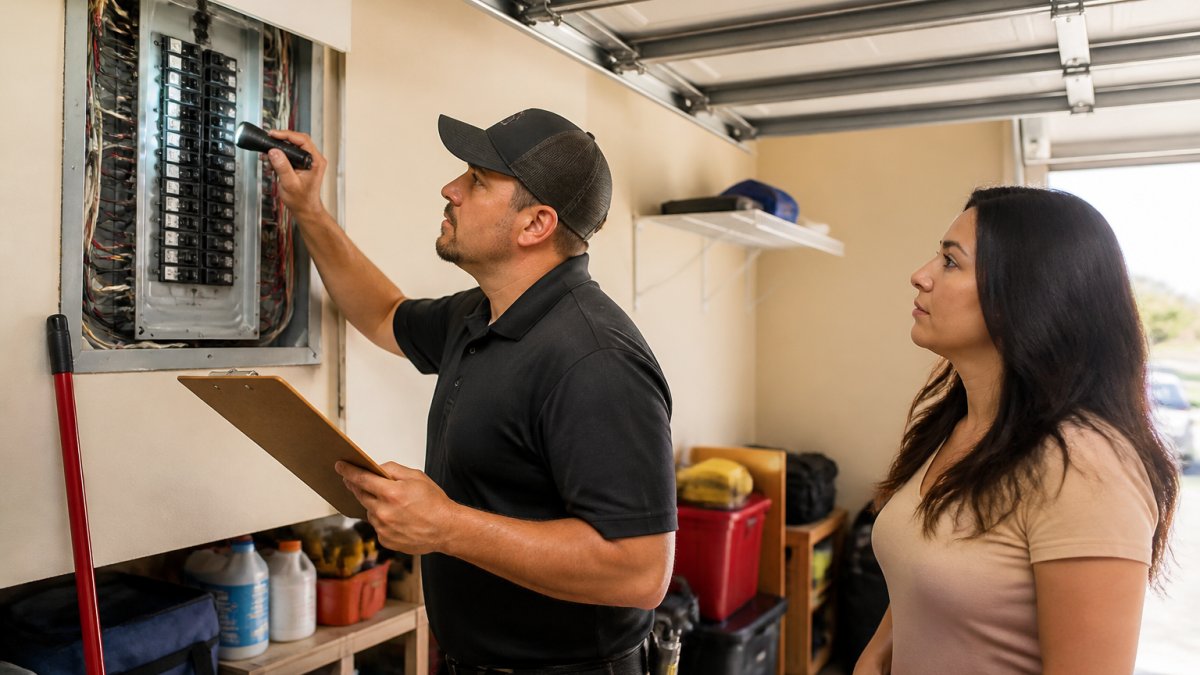
Here is how the day usually runs:
- The inspector arrives and reviews access to the attic, crawlspace, and utility areas.
- They work through the exterior first: roof, siding, grading, and drainage.
- They move inside system by system: electrical, plumbing, HVAC, then structural.
- They photograph defects and note safety concerns as they go.
- They walk you through the major findings before they leave.
For a fuller walkthrough of the day, read our guide on what happens during a home inspection.
Book Your TREC-Licensed Inspection with Integrity Property Inspections
A licensed inspection turns a nervous purchase into an informed decision. You get a clear picture of the property condition, a report you can act on, and a professional who answers to the state.
At Integrity Property Inspections, our team of licensed TREC inspectors covers El Paso and Southern New Mexico. We deliver same-day reports, clear and actionable findings, and specialized assessments like thermal imaging and pool inspections. We also offer builder quality control inspections. We treat every property as if we were buying it ourselves.
Get started with Integrity Property Inspections and inspect with confidence. Book your inspection now.
Frequently Asked Questions
What is a TREC-licensed home inspector?
A TREC home inspector is licensed by the Texas Real Estate Commission, the state body that sets licensing requirements and standards of practice for home inspectors. To earn the license, an inspector completes required classroom and field training, passes a licensing exam, and works under a licensed professional before qualifying. The license must be renewed, and inspectors are held to TREC’s minimum inspection requirements and reporting standards on every job. Hiring a TREC home inspector means the person assessing your property has met a state-defined baseline for training and conduct.
How can I verify a home inspector’s license?
Use the Texas home inspector license lookup on the Texas Real Estate Commission website. Search by the inspector’s name or license number, then confirm the license status is active and check for any disciplinary history. Ask the inspector for their license number when you book, and match it against the lookup before the inspection. This takes a few minutes and confirms the person entering your property is licensed to do the work, not just advertising as an inspector.
How long does a home inspection take?
Inspection length depends on the size, age, and condition of the house, so ask the inspector for an estimate when you schedule. Ask the inspector for an estimate when you schedule, and plan to attend the last hour so you can see the findings in person. Report delivery time is separate from the inspection itself, so confirm the turnaround before you book.
Can a home inspector recommend repairs or contractors?
A licensed inspector documents defects and safety concerns in the inspection report, and a licensed inspector’s report should remain independent of repair work. Ask questions to ask a home inspector about how they present findings: a good report describes the defect, explains why it matters, and points you to the next step, such as a specialist evaluation, without steering you to a specific repair company.
The gap between a cheap inspection and a licensed one rarely shows up on the invoice. It shows up months later, when a foundation crack or a failing panel surfaces. Verify the license, ask the hard questions, and book an inspector who stands behind the report.
